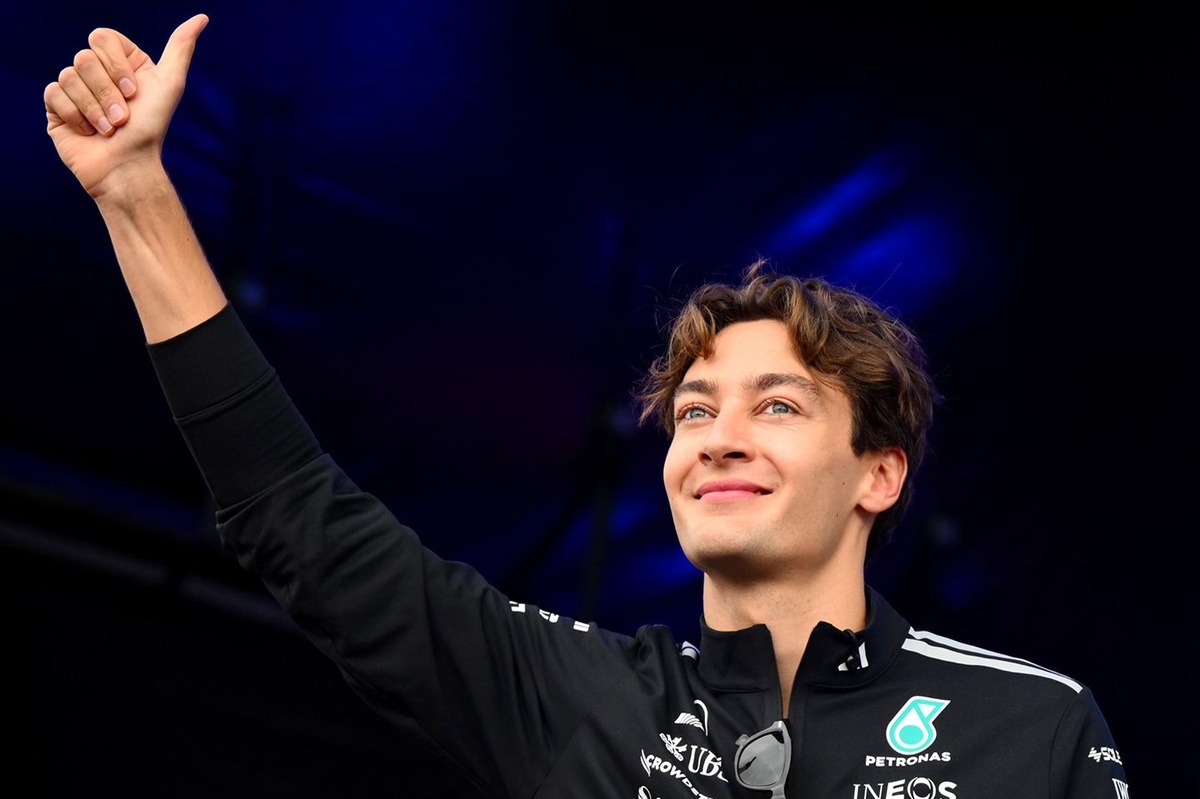
F1 Mind Games: George Russell on Red Bull's Pre-Season Strategy
The Formula 1 pre-season is a crucible of anticipation, where teams unveil their latest machinery and drivers get their first taste of the competitive landscape. Yet, it's also a highly strategic arena, a theatre of veiled intentions and psychological warfare. Amidst the flurry of lap times and technical analyses, Mercedes driver George Russell has consistently highlighted one team as the biggest enigma and potential threat: Red Bull Racing. Russell's candid remarks have cast a spotlight on what he perceives as deliberate 'mind games' from the Austrian outfit, painting a vivid picture of the intricate dance that defines F1's build-up to a new season. His observations regarding Red Bull's "suspiciously slow" testing pace have sent ripples across the paddock, suggesting that behind the seemingly underwhelming numbers lies a formidable, hidden challenge.
The Enigma of Pre-Season Testing: Fact vs. Fiction
Pre-season testing is notoriously misleading. Teams are not primarily focused on setting blistering lap times, but rather on crucial data acquisition, understanding their new car's behaviour, and ensuring reliability. However, this technical necessity provides the perfect cover for strategic manipulation. The art of 'sandbagging' – deliberately concealing a car's true performance – is as old as F1 itself. Teams often run higher fuel loads, employ conservative engine modes, or even avoid using the softest, fastest tyre compounds to obscure their genuine pace.
There are several compelling reasons behind this strategic poker. Firstly, keeping rivals guessing denies them crucial intel on your car's strengths and weaknesses. If a team appears dominant early, it can motivate competitors to redouble their efforts, potentially leading to faster development curves. Secondly, a seemingly slower performance can alleviate pressure, allowing a team to work quietly without the intense scrutiny that comes with being labelled an early favourite. Most critically, especially after significant regulation changes, teams want to avoid revealing any radical or innovative design elements that could be scrutinised by competitors or even the FIA for potential rule infringements. A revolutionary component, if its full advantage is shown too early, risks being copied or challenged. This intricate blend of technical evaluation and psychological manoeuvring makes interpreting pre-season times a highly speculative exercise for fans and pundits alike.
George Russell's Persistent Red Bull Warning
Mercedes' George Russell has been an outspoken voice in this pre-season narrative, consistently pushing back against suggestions that his own team might be the early pacesetters. Instead, he has pointed his finger firmly at Red Bull, despite their seemingly muted performance in certain testing sessions. Russell observed that while Mercedes maintained a "consistent" approach to their testing, running steady fuel loads and power settings without playing "strategic poker," Red Bull's trajectory was baffling.
"From our side, there hasn’t really been any strategic poker," Russell affirmed. "We’ve been very consistent with our run plans over the course of the two weeks, staying pretty consistent on fuel loads and power stuff. We didn’t change our plans during the course of the test based on us looking strong or slow."
The contrast with Red Bull, in Russell's eyes, was stark. He highlighted that after what Mercedes calculated to be a strong first test for Red Bull, their performance in the subsequent week dipped significantly. "I think Red Bull looked suspiciously slow in the second test," Russell stated. "We had them down as, I believe, the quickest in the first test. And based on our numbers, they went seven tenths slower compared to themselves in the second test." This drastic drop, while Mercedes and Ferrari improved by a couple of tenths with upgrades, left Russell genuinely perplexed. "I’m struggling to wrap my head around how they’ve lost seven tenths in a week," he admitted. This persistent bewilderment underscores Russell's conviction that Red Bull's true potential remains largely untapped and deliberately hidden. For more on Russell's specific concerns, you can read
Russell Puzzled by Red Bull's Suspiciously Slow F1 Test.
Decoding Red Bull's Pre-Season Strategy
So, if Red Bull indeed went "suspiciously slow," what could be the motivation behind such a deliberate move? The answer likely lies in a combination of confidence, strategic cunning, and the unique circumstances surrounding their power unit. This season marks a significant milestone for Red Bull as a power unit manufacturer, having taken over Honda's engine program. While this could be a genuine area of challenge and development, Mercedes' internal assessments suggest the RB22 package is "very competitive, even on the engine side." This hints that any apparent lack of pace isn't necessarily a performance deficit but rather a carefully orchestrated smokescreen.
Red Bull, under the leadership of Christian Horner and Adrian Newey, are renowned for their meticulous approach to every aspect of racing. With a driver of Max Verstappen's calibre, they possess a formidable combination that can deliver results even when the car isn't demonstrably superior. By appearing slower, they manage expectations, avoid revealing potential weaknesses, and most importantly, keep their rivals guessing. This psychological edge can be invaluable, especially in the opening races. If rivals believe Red Bull is struggling, they might not push as hard on development, only to be caught off guard when the true pace of the RB22 is unleashed. Furthermore, in an era of new regulations, any radical design choices are best kept under wraps for as long as possible to avoid unwanted scrutiny from the FIA and rival engineers eager to find loopholes. The longer their true innovations remain hidden, the greater the potential for an early-season advantage.
The Broader Landscape: Russell's Championship Aspirations and Rivalry
George Russell's consistent focus on Red Bull also has a deeper layer relating to his own championship aspirations. Having joined Mercedes too late to fully enjoy their dominant era, these new regulations present his best opportunity yet to secure a World Championship. Russell is acutely aware of the narrative that places him among the favourites for the title. Yet, he has spent months arguing against this very notion, consistently redirecting attention towards other strong contenders, particularly Red Bull.
This isn't merely modesty; it's another facet of the mind games at play. By downplaying Mercedes' prospects and elevating Red Bull's perceived threat, Russell effectively manages expectations for his own team, reducing pressure. Simultaneously, he implicitly places more psychological burden on Red Bull, suggesting that their seemingly slow testing pace is a facade. This subtle messaging is part of the broader psychological warfare that defines the top tier of F1. While Ferrari and other "usual suspects" are acknowledged, Russell's unwavering focus on Red Bull highlights who he genuinely believes will be his fiercest competitor. His warnings are not just about Red Bull's car, but also about the mental battle that underpins every championship challenge. For more insights on Russell's concerns about Red Bull's hidden pace, see
George Russell Warns: Red Bull's Hidden F1 Pace a Threat.
The Psychology of F1: Beyond the Stopwatch
The pre-season narrative crafted by drivers and team principals plays a significant role in setting the tone for the championship. Every quote is analysed, every gesture scrutinised. George Russell's observations about Red Bull are not just technical assessments; they are strategic pronouncements designed to influence perception. By publicly expressing his confusion and suspicion, Russell applies subtle pressure on Red Bull, forcing them to consider how their performance will be interpreted once the racing begins. It's a game of feints and bluffs where even claiming transparency, as Russell does for Mercedes, can be its own form of strategic messaging.
For fans, navigating the labyrinth of pre-season results requires a nuanced approach. Instead of focusing solely on headline lap times, it's more insightful to observe consistency over long runs, how different teams use various tyre compounds, and the overall reliability of their cars. These metrics often provide a clearer, albeit still incomplete, picture of a team's genuine potential. The psychological battle waged in the media is as much a part of the F1 spectacle as the technical innovations and on-track duels.
In conclusion, George Russell's insights into Red Bull's pre-season strategy offer a fascinating glimpse into the intricate world of Formula 1 mind games. His struggle to comprehend Red Bull's "suspiciously slow" testing pace underscores the strategic depth prevalent in the sport. Whether Red Bull's apparent lack of pace was a genuine struggle or a masterclass in sandbagging remains to be seen. What is clear, however, is that Russell and Mercedes are taking nothing for granted, fully expecting Red Bull to emerge as a formidable force. As the lights go out for the first race, the true pace of every car will finally be revealed, putting an end to the speculation and ushering in the real competition on track. Until then, the pre-season chess match continues, with George Russell keeping a vigilant eye on Red Bull's every move.